
What I’ve Learned About Running Internal Data Conferences
A practical Q&A

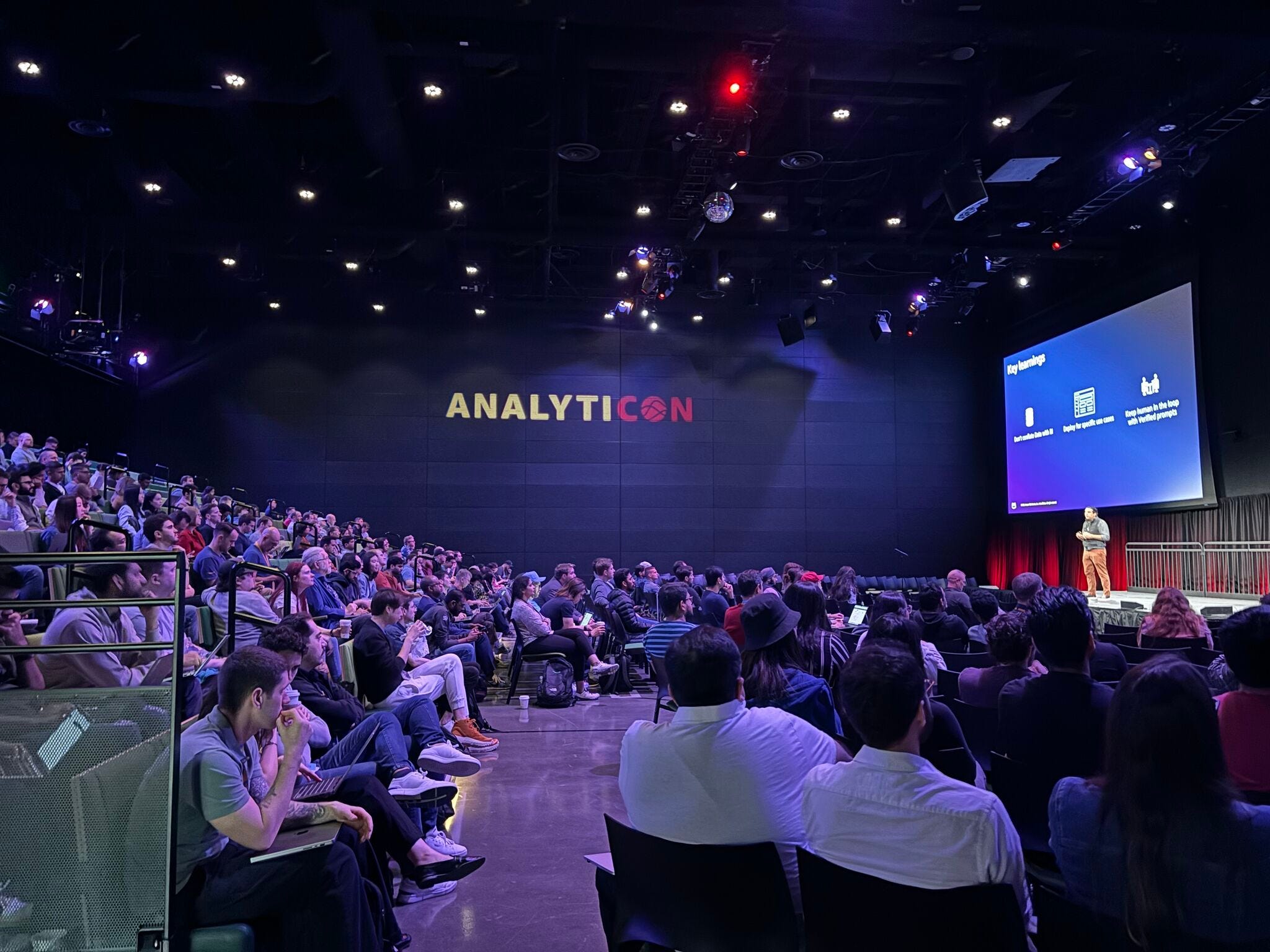
Internal data conferences aren’t for everyone. They tend to make sense once a company reaches a certain size, when data work is spread across teams, tools, and locations, and people start to lose sight of what others are building.
Over the past few years, I’ve been involved in organizing and co-chairing a large internal data conference. A reader recently asked me to share lessons I’ve learned along the way, and it led me to reflect on the things that truly matter.
I’ve shaped this article as a Q&A, with emphasis on the decisions that come up when you’re thinking about doing this for real. My advice assumes you’re considering a large internal gathering, not a small team offsite.
Q1. Why even bother to run an internal data conference?
As companies grow and diversify, data work tends to get fragmented. Roles become more specialized. Teams adopt different tools and approaches. Entire groups can wind up solving similar problems without ever crossing paths.
An internal conference is a great way to bring those people together. It gives data folks the chance to learn from one another, compare tactics, and see how similar scenarios are handled in different parts of the business. It also creates a low-risk environment for people to practice presenting and sharing their work, especially in orgs where there aren’t many public speaking opportunities. That kind of learning is hard to get through day-to-day work alone.
You might be wondering whether external conferences can serve the same purpose. I’d say no, they can’t. Internal events are uniquely valuable because everyone works for the same employer. That setting creates far more freedom to present real case studies, speak candidly about successes and failures, and go deeper than would ever be possible out in public. Over time, building a shared understanding - and building relationships - will strengthen both the work at hand and company culture overall.
Q2. How do internal conferences like this usually get started?
In my experience, they don’t often begin as a formal program. Instead, they tend to hatch when you reach a critical mass of people who are thinking, “Surely I’m not the only one who does this kind of work. I want to meet other people who do what I do!”
Analyticon is a good example. Long before I got involved, it began as a grassroots effort. A few data folks wanted to learn from one another, so they set up informal meetings in a single building in Seattle. Then it spread to multiple buildings. Eventually there was enough shared interest to justify moving into a conference venue large enough to hold the growing crowd. Everything that followed was built on that foundation.
I’ve seen similar patterns elsewhere. Sometimes the catalyst comes from practitioners who want to share knowledge and network. Other times, a manager recognizes the value of that kind of community and asks someone they trust to help kick it off. In either case, it’s a matter of building momentum.
The magic happens when there’s genuine enthusiasm. You need people who are willing to invest their time, learn as they go, and keep trying. These things are meant to evolve. Often the people who end up leading them are the ones who have participated as volunteers, voiced their opinions, and cared enough to keep building something better.
Q3. How do you think about purpose and vision, especially in the beginning?
One of the first things to clear up is what kind of conference you’re actually trying to run. It’s not enough to say “knowledge sharing.” You need to be more specific.
Some internal events are more like academic conferences. They bring together scientists who want to rally around shared ideas and eventually publish new research together. That’s a valuable goal, but it’s quite different from a conference that’s focused on applied work.
A practitioner-focused data conference is much more about how things get built, how problems get solved, and what people have learned from doing. The content tends to be concrete and experience-based. There’s usually room for inspiration too, helping people see the bigger picture and raise the bar for their own work, but the center of gravity is practical.
You also need to think about how broad your audience should be. Data work spans many roles, and it’s tempting to say the event is “for everyone.” That’s too vague for my taste. Is the conference meant for data engineers, analysts, scientists, or some combination? What about people in adjacent roles, like product or finance, who want to build data fluency or explore a transition into data? Is it also for software engineers? etc.
Be clear about who it’s for. People should be able to look at the conference and quickly answer the question, “Is this for me?” When that’s the case, attendees will be more satisfied, and the planning team will have an easier time making downstream decisions like selecting content or writing large-group comms.
Q4. What kinds of goals make sense for an internal conference?
Early on, it helps to have simple goals. The two that matter the most are number of attendees and attendee satisfaction. If people show up, stay engaged, and leave feeling like it was a good use of their time, you’re on the right track.
That said, one thing I wish I’d done sooner was put more rigor around how we measured the basics. Having a consistent way to track attendance and a well-designed survey will give you a baseline that you can learn from over time. It doesn’t need to be fancy, but you’ve got to do it. Without the fundamentals in place, it’s hard to tell whether you’re improving.
It can also be tempting to fast-forward straight to downstream outcomes, like improved performance, career progression, or better business results for people who attend. You might even explore this route with partners in HR. In practice, HR data is often restricted (for good reason), and pursuing it too early can turn into a distraction. Those outcomes may exist, but they aren’t easy to attribute cleanly.
Qualitative feedback is often more useful, especially in the beginning. Testimonials and survey verbatims can give you a sense of what worked and what didn’t. Treat your goals as a way to learn and improve. Focus on delivering a great experience for your attendees - the rest will follow.
Q5. How do you motivate people to take time away from their day jobs to attend? Or to speak?
For attendees, the agenda must be compelling. You’re asking people to take time away from their day jobs. If it’s an in-person event, they might need to travel. They’ve got to feel certain that they’ll miss out if they don’t attend.
That could mean delivering experiences they can’t get anywhere else, like hands-on workshops and structured networking. In-person events are at their best when people can learn by doing and connect with one another in meaningful ways. Especially in the first year, when there’s no precedent, you’ve got to work harder to show why it’s worth showing up. If you’re worried about low turnout, it can help to set a cap on attendance (a little scarcity goes a long way).
Attendees’ managers may also need convincing. Make it easy for people to ask for support to step away from their normal duties. A simple “convince my manager” template1, where you outline the purpose of the event and describe what an attendee stands to gain, can remove friction and make it easier for managers to say yes.
For speakers, a conference’s reputation matters, and it takes time to build. Established conferences attract a flood of submissions because people know it will be worthwhile. You’ve got to work your way up to that. Early on, it helps to focus on what’s in it for the speaker: a chance to showcase their work, reflect on what they’ve learned, and build credibility with peers. Clear expectations about the time commitment, along with light support like dry runs (especially for first-time presenters), will show that you take their contribution seriously. That’s what gets people to say yes the first time, and then come back again.
Q6. Let’s talk about content. What advice would you give there?
Content is the hardest part to get right, and it’s the one thing that you will keep refining year after year after year. Venues, food, swag, and logistics all matter, but they’re not why people show up. They come for the content.
If you run an open call for content, you won’t really know what you’ve got until the submission window closes, even if you’ve set clear themes. Some topics will attract a ton of interest and others won’t get much traction at all. That’s normal.
When you see clusters of submissions on the same topic - whatever happens to be hot - it’s important to be selective. Choose the strongest proposals and go deep (perhaps through workshops), and use lighter-weight formats like short talks or poster sessions to feature multiple perspectives. Conversely, pay attention to what’s missing. If there’s an important topic your audience needs to hear about and no one volunteers to speak, that’s a place for organizers to step in and shape the agenda intentionally. Over-indexing on a single theme is usually a missed opportunity.
The goal is to curate an agenda that serves the audience. If you treat content selection as an act of stewardship, the conference will continue to grow in value.
Q7. If you had to give just one piece of advice to someone who is thinking about doing this, what would it be?
Put the audience at the center of your thoughts. Let that guide the content you select, the formats you use, and the overall shape of the event. Design the experience around what your attendees actually need.
If people leave feeling like their time was respected and well spent, they’ll come back and they’ll recommend it to others. Over time, that’s what makes an internal conference self-sustaining.